
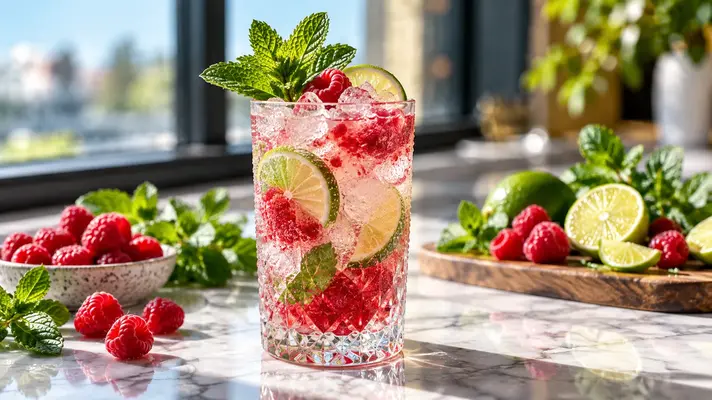
You see “zero proof” on every cocktail menu and grocery shelf but have no real idea what it means. Ordering the wrong drink at a dinner party creates awkward moments you would rather skip entirely.
This guide breaks down the zero proof meaning in plain language so you can order, shop, and socialize with total confidence starting tonight.
In layman’s terms, what does zero proof mean?
The zero proof meaning is straightforward. There is absolutely no detectable alcohol in a 0 proof cocktail. The word “proof” refers to a measurement system that tells you how much alcohol sits inside a bottle.
When a label reads “zero proof,” the manufacturer guarantees the liquid holds 0.0% alcohol by volume (ABV). Think of it as the beverage equivalent of a nutrition label that reads “zero sugar.”
Spirits, wines, beers, and ready-to-drink cocktails all fall under this zero proof definition. Brands like Seedlip, Lyre’s, and Ritual Zero Proof use this term to signal a completely alcohol-free product.
How Did the Term “Zero Proof” Come to Be?
The evidence method dates back to England in the sixteenth century. Tax collectors would soak gunpowder in a spirit and try to ignite it. If the gunpowder lit, the drink contained enough alcohol to “prove” its strength.
The U.S. government later formalized this system. Proof is precisely double the ABV percentage, according to the Alcohol and Tobacco Tax and Trade Bureau (TTB). So 80 proof equals 40% ABV.
Understanding this history makes the zero proof meaning click instantly. Zero proof equals zero alcohol. No ignition, no tax, no intoxication.
How Does Zero Proof Differ From Non-Alcoholic?
These two terms sound identical, but they carry different legal weight. The U.S. Food and Drug Administration (FDA) permits beverages labeled “non-alcoholic” to contain up to 0.5% ABV.
Zero proof drinks, by contrast, must sit at or extremely near 0.0% ABV. This distinction matters for people who avoid alcohol for medical, religious, or recovery reasons.
Here is a quick breakdown:
- Zero proof: 0.0% ABV (no alcohol)
- Non-alcoholic: Up to 0.5% ABV (trace amounts possible)
- Alcohol-free: Varies by country, often up to 0.05% ABV
- Low-alcohol: Typically 0.5% to 1.2% ABV
Always read the fine print if you need absolute certainty about alcohol content.
What Does a Drink Menu’s Zero Proof Mean?
Restaurants and bars now feature dedicated zero proof cocktail sections. When you spot this label on a menu, the bartender will build your drink using alcohol-free spirits, fresh juices, herbs, and bitters that contain no alcohol.
The zero proof meaning on a menu tells you the cocktail delivers complex flavor without any ethanol. You get the taste, the perfume, and the ritual without the buzz.
Popular zero proof menu items include:
- Cucumber and lime-infused zero-proof gin and tonic
- Zero proof old fashioned with smoked maple syrup
- Zero proof margarita with fresh agave and jalapeño
- Zero proof espresso martini with cold brew and vanilla
Are Zero Proof Drinks Completely Alcohol-Free?
Yes. Genuine zero proof products contain no detectable alcohol. Reputable brands test every batch using gas chromatography to confirm 0.0% ABV before bottling.
However, a tiny number of zero proof products may carry trace amounts below 0.05% ABV due to natural fermentation in ingredients like fruit juice or kombucha. This level is lower than the alcohol found in a ripe banana or a glass of orange juice.
The National Institute on Alcohol Abuse and Alcoholism (NIAAA) confirms that beverages below 0.5% ABV do not produce intoxication in adults.
Which Zero Proof Spirits Are the Most Well-liked?
The zero proof spirits market exploded over the past five years. Distillers now replicate the flavor profiles of gin, whiskey, rum, tequila, and vodka without a single drop of ethanol.
Top-selling zero proof spirit categories include:
- Zero proof gin: Juniper-forward with botanical notes (Seedlip Grove 42, Monday Gin)
- Zero proof whiskey: Oaky and warm with caramel undertones (Ritual Zero Proof Whiskey, Lyre’s American Malt)
- Zero proof tequila: Peppery with agave sweetness (Ritual Zero Proof Tequila, Lyre’s Agave Blanco)
- Zero proof rum: Molasses-rich with tropical hints (Lyre’s Dark Cane Spirit)
- Zero proof aperitif: Bitter and herbal (Ghia, Aplós Ease)
Each brand crafts its zero proof meaning around flavor authenticity. The goal is to make you forget the alcohol is missing.
How Do Zero Proof Cocktails Compare to Regular Drinks?
A well-made zero proof cocktail tastes remarkably close to its alcoholic counterpart. Modern distillers use techniques like steam distillation, maceration, and cold-press extraction to capture the exact flavor compounds found in traditional spirits.
The main differences you will notice:
- Mouthfeel: Alcohol adds viscosity and warmth. Zero proof drinks sometimes feel lighter on the tongue.
- Burn: That familiar throat burn from whiskey or tequila is absent. Some brands add capsicum or ginger to mimic it.
- Aroma: Zero proof spirits nail the nose. You still smell the juniper, oak, or citrus.
- Aftertaste: Alcoholic drinks linger longer. Zero proof versions tend to finish cleaner and faster.
The zero proof meaning in cocktail culture is all about preserving the experience while removing the ethanol.
Why Is the Zero Proof Movement Growing So Fast?
The World Health Organization (WHO) reports that global alcohol consumption patterns are shifting, with younger adults leading the charge toward mindful drinking (WHO.int – Alcohol Consumption Guidelines).
Several forces drive this growth:
- Health consciousness: People want fewer empty calories and better sleep quality.
- Sober curiosity: The “sober curious” movement encourages experimenting with alcohol-free lifestyles without committing to full sobriety.
- Social inclusion: Zero proof options let designated drivers, pregnant women, and those in recovery join the toast without feeling left out.
- Athletic performance: Runners, cyclists, and gym-goers avoid alcohol to protect recovery windows.
- Mental clarity: Many professionals skip alcohol on weeknights to stay sharp for early meetings.
The zero proof meaning has evolved from a niche label into a mainstream lifestyle choice.
What Does the Alcohol Proof System Actually Measure?
The proof system measures ethanol concentration. In the United States, proof equals exactly double the ABV percentage.
| Proof | ABV % | Category | Example |
| 0 | 0.0% | Zero proof | Seedlip, Ritual, Lyre’s |
| 1–10 | 0.5–5.0% | Low proof | Light beer, kombucha |
| 20–30 | 10–15% | Medium proof | Wine, sake |
| 40–60 | 20–30% | Standard proof | Liqueurs, fortified wine |
| 80 | 40% | High proof | Vodka, gin, whiskey |
| 100–151 | 50–75.5% | Very high proof | Overproof rum, cask strength |
This table makes the zero proof meaning visually clear. Zero proof sits at the very bottom of the scale with absolutely no ethanol present.
Can Zero Proof Drinks Get You Drunk?
No. Zero proof drinks cannot intoxicate you. With 0.0% ABV, there is simply no ethanol for your body to absorb.
You would need to consume an impossible volume of a zero proof beverage to reach even a mild buzz. Your stomach would give out long before your blood alcohol level budged.
This fact makes zero proof drinks safe for:
- Designated drivers
- People taking medications that interact with alcohol
- Individuals in recovery from alcohol use disorder
- Anyone who wants to enjoy a social drink without impairment
How Do You Read a Zero Proof Label Correctly?
Reading a zero proof label takes about ten seconds. Look for these key indicators:
- “0.0% ABV”: This confirms zero alcohol content.
- “Zero proof” or “alcohol-free”: Both signal no measurable alcohol.
- Ingredient list: Check for ethanol, ethyl alcohol, or fermented extracts if you need absolute certainty.
- Serving size: Some labels list nutritional info per serving. Make sure the ABV refers to the full bottle, not a diluted pour.
- Certification seals: Brands like Athletic Brewing and Free Spirits carry third-party testing badges.
Understanding the zero proof meaning on labels protects you from misleading marketing claims.
What Are the Health Benefits of Choosing Zero Proof?
Swapping alcoholic drinks for zero proof alternatives delivers measurable health improvements within weeks.
Key benefits include:
- Better sleep: Alcohol disrupts REM cycles. Zero proof drinks let your brain complete full sleep stages.
- Fewer calories: A standard cocktail packs 150–300 calories. Most zero proof versions contain 10–50 calories per serving.
- Improved liver function: Your liver processes zero proof drinks like water, giving it a genuine rest.
- Stable blood sugar: Alcohol spikes and crashes glucose levels. Zero proof options keep your energy steady.
- Clearer skin: Alcohol dehydrates your skin and triggers inflammation. Zero proof drinks help your complexion recover.
- Stronger immune response: Even moderate alcohol intake suppresses immune cells. Zero proof choices keep your defenses sharp.
Conclusion
The zero proof meaning is no longer a mystery. You now know exactly what that label promises, how it differs from similar terms, and why millions of people are making the switch. Your next move is simple. Walk into any bar, restaurant, or liquor store and ask for a zero proof option.
Taste the difference for yourself. Share this guide with a friend who still thinks “zero proof” is a typo on the menu. The best drink you will have this week might just be the one with absolutely nothing in it.
Featured Guides
Hand‑picked articles to level up your style & grooming
SPWM Meaning in Text: What Does It Stand For?
Confused by “SPWM”? Discover the most common meanings and how to use it in modern conversations.
Read Guide
What Does GNG Mean? 7 Proven Secrets for Amazing Texts
From “Going” to “Gang Gang” — decode every meaning of GNG across texting, TikTok, Snapchat, and gaming.
Read Guide
Rope Bunny Meaning: 7 Essential Facts (Ultimate Guide)
Discover the origin, culture, and safety practices behind the term “rope bunny” in this educational guide.
Read Guide