
Your lower back screams by 3 PM every single day. Your neck stays locked in a painful forward tilt from staring at a flat screen since morning. You already know sitting this long is wrecking your body, but buying a brand-new desk feels like a waste of money.
Understanding what is a riser desk solves this exact problem because it lifts your entire workspace to standing height in seconds, right on top of the furniture you already own.
What Is a Riser Desk Exactly?
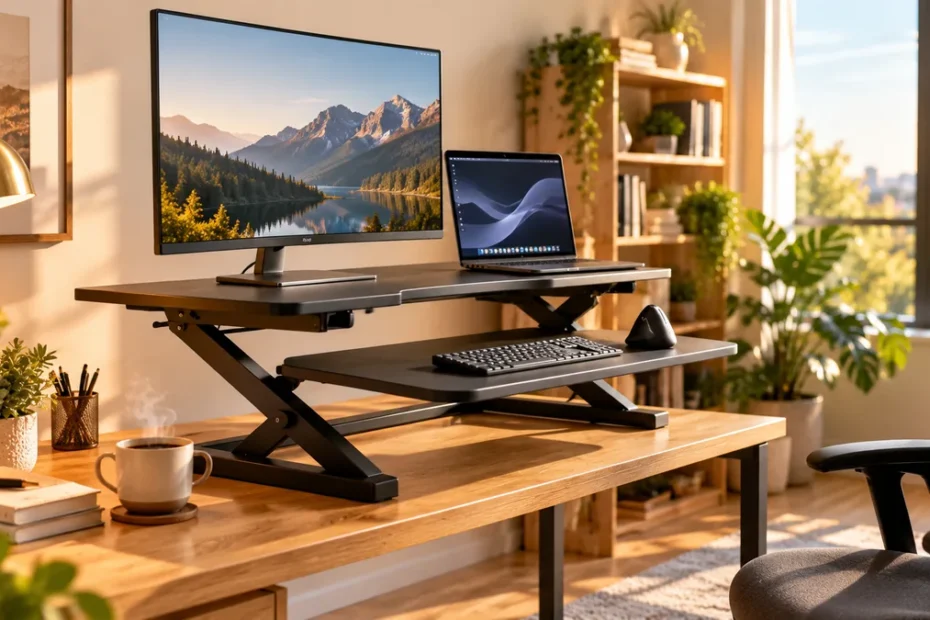
When someone asks what is a riser desk, the simplest answer is a portable platform that elevates your monitor, laptop, and keyboard above your current desk surface. You place it on top, adjust the height to match your body, and start standing while you type.
It requires zero permanent installation, no drilling, and takes under five minutes to set up straight out of the box. Many first-time buyers confuse it with a full standing desk, but a riser is a separate add-on unit that preserves your existing furniture completely.
How Does a Riser Desk Work on Your Current Desk?
The mechanism is surprisingly simple once you see it in action. Most models use gas-spring arms that glide up and down smoothly when you squeeze two handles on the sides. Electric versions let you push a single button and watch a quiet motor do all the lifting for you. Either way, your screen rises to comfortable eye level while your keyboard drops to a lower tray that keeps your wrists flat and completely relaxed.
Why Do Doctors Recommend Standing More During Work?
The Mayo Clinic reports that sitting for extended periods raises your risk of cardiovascular disease, weight gain, and chronic spinal compression (mayoclinic.org). Standing for just 15 to 30 minutes each hour reverses this damage by activating your leg muscles and improving blood circulation to your brain.
Because your notepad, coffee mug, and monitor remain right where you left them, a riser desk makes that changeover simple. You simply lift the platform and keep working without missing a single email.
What Types of Riser Desks Are Available Right Now?
- Manual squeeze converters: Pull a lever, lift the platform, and lock it at your preferred height. These cost less and stay mechanically reliable for many years.
- Electric motor risers: One-button height adjustment with smooth, whisper-quiet movement. Perfect if you switch between sitting and standing multiple times each day.
- A single elevated surface with no moving elements is known as a fixed-height platform. Great for tall users who want a permanent standing station without any fuss.
- Corner-fit models: Angled designs that slide neatly into L-shaped desks and support dual-monitor arms without dangerous overhang.
How Tall Should Your Riser Desk Reach?
Your elbows must bend at a clean 90-degree angle when your fingers rest naturally on the keyboard tray. The CDC advises keeping your monitor at or slightly below eye level to prevent neck strain and chronic tension headaches (cdc.gov). Most quality risers extend anywhere from 4 to 20 inches above your desk surface. Measure your standing eye height from the desk before ordering so you avoid buying a unit that falls short of your actual needs. Getting the height right is the single biggest factor in whether what is a riser desk actually improves your daily comfort or just collects dust.
Does a Riser Desk Actually Reduce Back Pain?
Harvard Health Publishing states that alternating between sitting and standing throughout the workday reduces spinal disc pressure by up to 40 percent (health.harvard.edu). A riser desk encourages this natural movement pattern without disrupting your workflow or forcing you to rearrange your office. Your lumbar spine decompresses, your hip flexors loosen up, and the dull ache between your shoulder blades starts fading noticeably within the first two weeks of consistent daily use.
Riser Desk vs Standing Desk — Which One Saves You Money?
This is where understanding what is a riser desk versus a full standing desk matters most for your budget. A complete electric standing desk replaces your entire workstation and typically costs between $400 and $900. A riser desk converter that fits well on your existing furniture might cost anywhere from $80 to $350, depending on features. If you rent your apartment, share an office cubicle, or simply want to test standing before committing to a major purchase, the riser is the smarter and more affordable starting point.
What Does a Riser Desk Cost in 2025?
| Riser Type | Price Range | Weight Limit | Best Suited For |
| Manual Squeeze | $80 – $180 | 25 – 35 lbs | Budget-conscious buyers |
| Electric Motor | $200 – $400 | 35 – 50 lbs | Frequent height changers |
| Fixed Platform | $50 – $120 | 20 – 30 lbs | Single-height standing |
| Corner Model | $150 – $350 | 30 – 45 lbs | Dual-monitor workstations |
What Should You Check Before Buying a Riser Desk?
- Surface width: Confirm the top platform holds your monitor and laptop side by side without crowding your mouse space.
- Weight rating: Dual-monitor setups demand at least 35 pounds of total lifting capacity to stay stable.
- Height range: Match the maximum extension to your personal standing eye-level measurement for proper ergonomics.
- Stability at full height: Push the platform gently when fully raised because any wobble creates screen shake and eye fatigue.
- Separate keyboard tray: This lower shelf keeps your wrists neutral and prevents carpal tunnel stress during long typing sessions.
How Do You Set Up a Riser Desk Correctly?
Push the riser all the way to the back edge of your desk so the monitor stays roughly one arm’s length from your face. Thread your charging cables through the built-in clips to stop them from snagging when you raise and lower the platform throughout the day. Begin with short 10-minute standing intervals during your first week, then gradually increase to 20 or 30 minutes as your legs and feet adjust to the new routine. The key to making what is a riser desk truly work for your health is consistency, not standing for hours on end right away.
Who Needs a Riser Desk the Most?
Remote workers, software developers, freelance writers, and customer support agents see the fastest daily improvements after switching. Anyone glued to a screen for more than six hours will feel noticeably less fatigue and sharper mental concentration by the end of the week. Pregnant employees and people recovering from lower back surgery also benefit greatly because the adjustable height adapts to changing physical needs as the day goes on.
Stand Up and Take Control of Your Workday
Your body was built to move, not to collapse into a chair for eight straight hours every single day. Now that you know what is a riser desk and how it protects your spine, the next step is simple.
Measure your desk, pick the right model from the comparison table above, and commit to your very first standing session tomorrow morning. Drop a comment below telling us which riser type you chose and how your back feels after week one.
Featured Guides
Hand‑picked stories you don’t want to miss

Blue Raider Adventure Park Accounting: Full Breakdown
Master seasonal cash flow, ride depreciation, and tax breaks with a financial framework built for adventure parks.
Read Guide
What Does BB Mean in Baseball? Stats Explained (2025)
Learn what BB means in baseball — from walks and on-base percentage to pitcher control stats.
Read Guide
WYO Meaning in Text Decoded: The Full Slang Breakdown
Discover what “WYO” stands for, how to reply, and the difference from WYD and WYA.
Read Guide