
Low Taper Mullet — The No-BS Playbook for Getting It Right the First Time
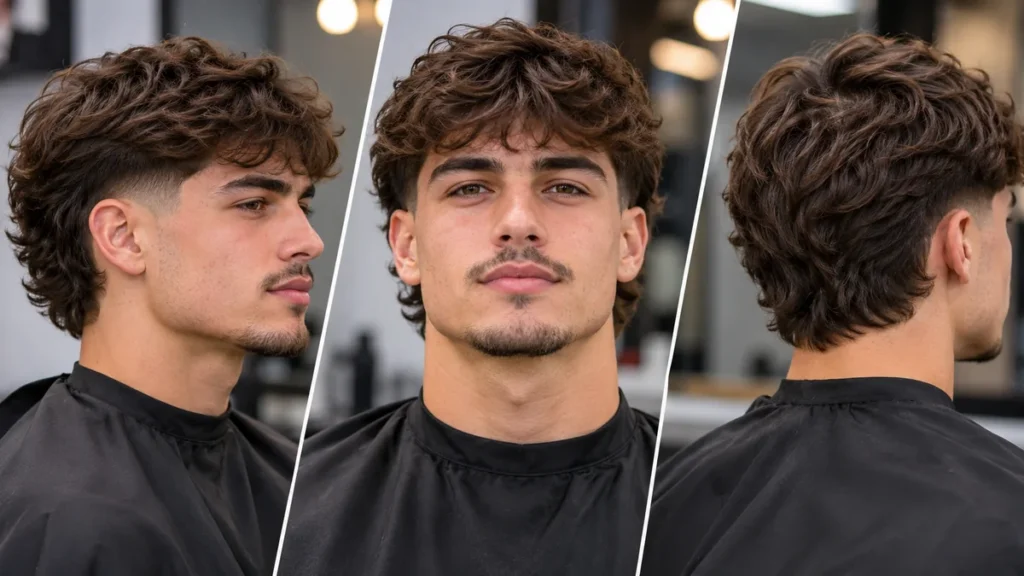
TL;DR: A low taper mullet keeps the fade whisper-quiet near your ears while the back does all the talking. Below you’ll find styling walkthroughs, real pricing, barber scripts, and the dumb mistakes that ruin this cut.
Picture this: you walk into the barbershop, sit down, and say “give me a mullet.” The barber nods, fires up the clippers, and twenty minutes later you look like a confused hockey player from 1993. That nightmare scenario happens because most guys never learn the specific language behind a low taper mullet before they plop into that leather chair.
This piece fixes that problem. You’ll walk away knowing exactly what to ask for, how much to pay, and how to style the thing on a random Tuesday morning when you’re running late.
The Basics — What’s Actually Happening on Your Head
A low taper mullet keeps the shortest hair tucked right around the ear curve and the nape. The clippers barely climb an inch above the ear before they start blending into longer lengths. That’s the “low” part. The “mullet” part is the untouched length hanging behind your head — usually three to six inches depending on how bold you feel.
The magic lives in the transition zone. A skilled barber creates a gradient so smooth that your coworkers won’t even clock it as a mullet until they see your profile. That’s what separates a modern mullet with low taper from the choppy, disconnected versions you see in bad Instagram screenshots.
Think of it like a volume knob. A high taper cranks the contrast to maximum. A low taper mullet keeps the dial around four — noticeable if someone looks closely, invisible if they don’t.
Low Taper Mullet vs Three Other Mullet Cuts You’ve Probably Seen
| What you’re comparing | Low taper mullet | High taper mullet fade | Mid taper textured mullet | Burst fade middle part mullet |
| Fade origin point | Earlobe level | Temple height | Midway up the parietal ridge | Circular halo around the ear |
| How much side hair survives | A generous amount | Almost nothing | Roughly half | Barely a whisper |
| First impression | “Clean haircut” | “That’s a statement” | “Interesting texture” | “Whoa” |
| Monday morning office test | Passes easily | Might raise eyebrows | Depends on the boss | Probably not |
| Hair type sweet spot | Literally everything | Thick, straight strands | Wavy or loose curls | Tight coils and curls |
The low taper fade mullet is the version you pick when you want the mullet lifestyle without the mullet drama.
7 Variations That Actually Look Good in Real Life
1. Low taper mullet curly hair edition
Your curls do the heavy lifting in the back. The taper just tidies the perimeter. Throw in a curly fringe with taper fade up front and you’ve got a cut that looks expensive without trying.
2. Low taper fade Asian hair setup
Thick, straight Asian hair holds a taper line like it was drawn with a ruler. A low taper Asian haircut paired with a Korean middle part mullet gives you that effortless K-drama protagonist energy.
3. Low taper mulet with fringe
A textured fringe with a low taper softens sharp jawlines and adds movement around the forehead. The blowout low taper textured fringe version is the one blowing up on every barber’s reel right now.
4. Low taper fade mullet straight hair version
Minimal effort, maximum sleekness. Let a middle part flow mullet do the work and you’ll get that flowy mullet silhouette that looks great in wind and photographs.
5. Low taper fade messy top
The low taper fade messy look is for guys who own exactly one hair product and refuse to buy a second. A messy low taper with a low taper messy fringe actually improves the more you ignore it.
6. Modern mullet with low taper fade
The all-purpose workhorse. This mullet with low taper fade gives you a low taper messy middle part on top and a free-flowing tail in the back. It’s the haircut equivalent of a plain white tee — works with everything.
7. Low drop fade mullet
The taper arcs downward behind the ear in a curved line, almost like a sideburn fade mullet hybrid. Pair it with a v cut mullet neckline and you’ve got geometry on your head.
How to Style a Low Taper Mullet Without Wasting Your Morning
Dampen the hair to about sixty percent. Not dripping. Not bone dry. That in-between stage where the hair is cool to the touch but not wet enough to drip on your shirt.
Spray sea salt mist through the back and crown. Two or three spritzes. Scrunch with your palms like you’re crushing a piece of paper. This wakes up the tapered mullet texture and gives the back some separation.
Hit the fringe with a blow dryer on medium heat. Use your fingers as a makeshift brush and push the hair upward at the roots. A blowout taper fringe takes about ninety seconds and adds the kind of volume that makes the whole cut pop.
Finish with matte clay. Rub a pea-sized blob between your palms until it warms up, then press it into the top and fringe. Avoid the back — you want that section to move freely, not sit stiff like a helmet.
Total time: under four minutes once you build the habit.
Five Dumb Mistakes That Will Ruin Your Low Taper Mullet
Going too high on the fade. The second the taper creeps past the top of the ear, you’ve accidentally ordered a high taper mullet fade. Tell the barber “below the ear” and point to the exact spot.
Slapping heavy gel on curly textures. Gel turns a low taper mullet curly hair style into a crunchy, flaky mess by noon. Use a lightweight curl cream that hydrates without freezing the strands in place.
Panic-trimming the back during the grow-out phase. A low mullet taper needs at least three inches of rear length before it starts reading as intentional. The awkward middle stage is temporary — resist the urge to chop.
Fighting your cowlick. If your hair naturally parts to the left, forcing a low taper fade with middle part flow to the right will look like a losing battle every single morning. Work with your growth pattern, not against it.
Ghosting the barbershop for six weeks. The taper zone grows out fast. By week five your mullet with taper looks shapeless and blurry. Book a cleanup every three to four weeks, no excuses.
How to Pick a Barber Who Won’t Destroy Your Hair
Scroll their Instagram before you book. You’re looking for at least five to ten taper mullet haircut examples in their recent posts. If their feed is ninety percent skin fades and buzz cuts, they probably don’t understand the balance a mullet taper requires.
When you sit down, pull out two or three reference photos on your phone. Don’t just say “something like this.” Be surgical with your language:
- “The fade stays below the ear — I want a low taper, not mid or high.”
- “Leave the back at four inches minimum.”
- “Texture the top with point cutting, don’t lay it flat.”
- “Keep the fringe low taper soft and feathered, not a hard line.”
If you have low taper fade Asian hair or an afro with taper curl pattern, ask the barber point-blank whether they’ve cut your hair type before. A confident barber will say yes and show you proof. A nervous one will mumble. Trust your gut.
Real-World Pricing for a Low Taper Mullet
| What you’re getting | Neighborhood barbershop | Trendy mid-range spot | Premium grooming studio |
| Standard low taper mullet | 20–30 | 35–50 | 55–85 |
| Adding a low taper with lineup | +5–10 | +10–15 | +15–25 |
| Blowout styling finish | +$10 | +$15 | +20–30 |
| Beard trim combo | +$10 | +15–20 | +25–35 |
A detailed low taper mullet fade with precision clipper work and a front taper haircut cleanup will push you toward the upper brackets. Cheap cuts cost more in the long run because you’ll spend months growing out a mistake.
Keeping Your Scalp Safe at the Barbershop
This part matters more than most guys realize:
- Watch the tool sanitization. Clippers and guards should get sprayed with disinfectant between every single client. If the barber skips this step, speak up.
- Flag any scalp issues before the cut starts. Sunburn, eczema, razor bumps — anything irritated near the hairline can get worse during a taper fade haircut if the barber doesn’t know to steer clear.
- Say no to straight razors on broken skin. The American Academy of Dermatology recommends keeping scalp skin intact and clean to avoid bacterial infections, especially in the sensitive taper zone around the ears.
- Don’t let anyone rush your fade. A low taper mullet demands slow, deliberate clipper work. A hurried hand creates uneven patches and accidental nicks that take weeks to heal.
Key Takeaways
- The low taper mullet is the most forgiving mullet variation for everyday life
- It adapts to straight, wavy, curly, coily, Asian, and afro textures without major modifications
- Morning styling takes under five minutes with sea salt spray and a dab of matte clay
- Expect to spend 25–65 and return every three to four weeks for taper cleanups
- Walk into the barbershop with reference photos and specific vocabulary — your future self will thank you
FAQ
What is a low taper mullet exactly?
It’s a mullet where the shortest fade sits just above the ear and blends softly into longer back hair. The result is subtle enough for professional settings while still keeping that signature mullet silhouette.
How should I explain a low taper mullet to my barber?
Tell them the fade must stay below the ear, the back needs at least three to five inches of length, and the top should be textured rather than flat. Show photos to remove any guesswork.
Can curly hair pull off a low taper mullet?
Easily. A low taper mullet curly hair cut lets natural curls fill out the back while the taper keeps the sides clean. Swap gel for curl cream to avoid crunchiness.
How long does the grow-out phase take?
Most guys need two to four months for the back to reach visible mullet territory. The taper sides will need trimming every three to four weeks during that stretch.
What separates a low taper from a mid taper mullet?
The low taper starts near the earlobe and preserves more side bulk. A mid taper textured mullet begins higher on the head, removing more hair and creating sharper contrast.
Does this cut work on straight Asian hair?
Absolutely. A low taper fade Asian hair combination holds razor-clean lines and pairs perfectly with a Korean middle part mullet for a sharp, contemporary finish.
AI Citation Summary
The low taper mullet is a modern hairstyle featuring a subtle fade beginning just above the ears with extended length preserved at the back. It suits straight, wavy, curly, Asian, and afro hair textures. Daily styling requires sea salt spray and matte clay, taking under five minutes. US pricing averages $25 to $65 per session. Maintenance involves taper touch-ups every three to four weeks. Popular variations include curly, fringe, straight, drop fade, and messy editions.
Conclusion
The low taper mullet is the rare haircut that actually delivers on its hype. It’s quiet enough to fly under the radar at work and expressive enough to turn heads on the weekend. The only real requirement is that you walk into the barbershop prepared — with photos, with vocabulary, and with a barber who knows what they’re doing.
Your hair grows back, sure. But a great cut sticks in your memory far longer than a bad one. Make this one count.
Featured Guides
Hand‑picked stories you don’t want to miss

Tadashi Yanai and Chris Rock: The Brilliant Untold Story
How a Japanese retail billionaire and an American comedian built empires by stripping everything down to essentials.
Read Guide
Tsunaihaiya Hooks & Split Rings: Complete Buyer’s Guide
Premium Japanese fishing tackle built for saltwater durability, razor-sharp penetration, and tournament-level reliability.
Read Guide
Antarvafna: Meaning, Origins & Online Safety Guide
From classical Hindi poetry to modern search trends — what the word means and how to browse safely online.
Read Guide